Main Story
Complete- Time
- 6 hours
- Difficulty
- Moderate (1.5/5)
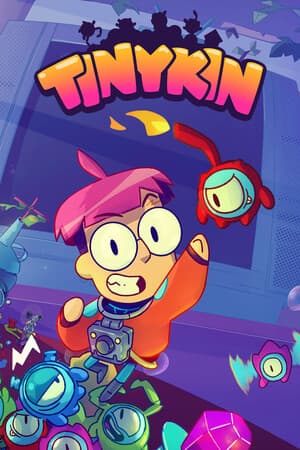
A charming, frictionless 3D collectathon with wonderful room-scale exploration and movement, but its namesake helpers rarely become more than color-coded keys.
Completion
Highlights & caveats
World Design · Standout
Every room earns its scale
Furniture, cables, shelves, and bug settlements turn ordinary spaces into dense vertical playgrounds.
Movement · Standout
The soapboard keeps things moving
Skating, grinding, gliding, and unlocked shortcuts make crossing the large rooms consistently satisfying.
Exploration · Strong
Collecting feeds exploration
Tinykin eggs, pollen, artifacts, and side jobs continually point toward another route or overlooked corner.
Presentation · Strong
Presentation sells the tiny world
Flat characters, colorful 3D rooms, lively music, and strange insect societies give the house a playful identity.
Pacing · Strong
The main trip stays brisk
Six easygoing hours are enough to see every room and finish the central mystery.
Puzzle Design · Mixed
Tinykin are mostly locks and keys
Most puzzles ask for the right color and quantity, with little resource pressure or room for clever solutions.
Challenge · Mixed
Challenge barely registers
The 1.5/5 main path is welcoming, but players looking for execution or strategy will find little resistance.
Navigation · Weak
No map hurts cleanup
Dense rooms are fun to discover and awkward to audit when the last pollen or side objective is missing.
Tinykin makes a Pikmin first impression that it has no interest in maintaining. Milo commands a crowd of color-coded creatures, but there is no combat, time pressure, or squad management. The tinykin are closer to a set of living keys, opening routes through a 1991 house that has become enormous from floor level.
The better comparison is a relaxed 3D collectathon. Every room is a self-contained playground, the soapboard makes simply crossing it fun, and there is almost always another shelf, cable, or side path worth following. The main story took 6 hours and stayed very easy at 1.5/5. That lightness is part of the charm and the clearest reason the game stops at good.
The house is the star. A den has become the site of a cardboard cathedral. The bathroom supports a nightclub. Each room still reads as an ordinary space, but its layers keep revising themselves: the floor points to a table, the table opens a route toward the shelves, and the shelves expose a corner that looked like background minutes earlier.
Milo is pleasant to move through them. The soapboard doubles as a sprint and rail grinder, while the bubble glider makes gaps readable. Ropes and other shortcuts keep revisits from resetting the whole climb. Moving toward the next object almost always feels good.
Collecting has a clean rhythm. Eggs expand the crowd and open heavier jobs. Pollen draws the eye through new routes and improves the glider. Artifacts and side jobs give detours a destination. You can send a group to carry something home, then continue exploring while they work.
The presentation holds those pieces together. Milo and the insects look like flat cutouts moving through colorful 3D spaces, and short animated introductions give each new tinykin an immediate personality. The bug societies are broad jokes more than deep stories, but they make every room feel occupied instead of merely decorated.
The tinykin do not develop at the same pace as the rooms. Interactions are plainly color-coded, the game selects the appropriate type, and the main question is usually whether you have found enough yet. Later spaces use more types at once, but rarely turn them into decisions. You recognize a target, throw the required number, and move on.
There is nothing wrong with an easy game. Tinykin just removes both failure and thought from too many of the same interactions. Once a room has been understood, there is little left to push back.
Reaching 100% took 8 hours at an easy 2/5 difficulty. Those last two hours do not become harder; they become less directed. Without a map, a room that was legible as a route becomes awkward to audit as a checklist. The cleanup is short, but searching an entire room for one missed pollen cluster is still the weakest version of the game.
Play it if you want Banjo-Kazooie or Spyro-style collecting, Chibi-Robo-sized spaces, and almost no pressure. The Pikmin comparison describes the crowd following Milo, not the strategy. Use the soapboard constantly, finish side jobs while you still remember where everyone lives, and treat each room as a platforming playground.
Full completion is manageable in 8 hours, but stopping after the 6-hour story preserves the best pace if cleanup does not appeal. Tinykin is good at turning ordinary rooms into places worth crossing. It is less successful at giving the creatures named after it anything interesting to decide.