Basic Progression
Complete- Time
- 20 hours
- Difficulty
- Moderate (2/5)
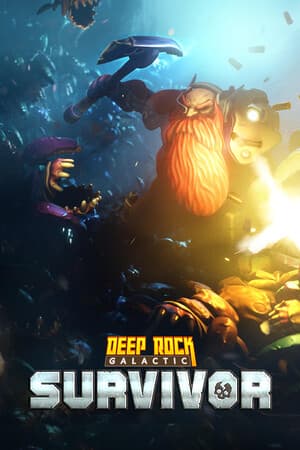
A clever survivorlike mining twist that works in short bursts, but movement-only combat, repeated dive arcs, and grind wear it down.
Completion
Highlights & caveats
Mining · Strong
Mining gives the loop a hook
Gold, nitra, tunnels, and escape lanes make routing more interesting than open-field kiting.
Session Pace · Strong
Short sessions fit the loop
The brisk runtime makes it easy to dip in for a dive before the repetition gets loud.
Objectives · Mixed
Objectives help at first
Mission goals give runs shape, but they start blurring into another checklist.
Extraction · Mixed
Extraction is tense but abrupt
The final scramble can feel exciting, though failure sometimes lands more sudden than fair.
Combat Agency · Weak
Movement-only combat wears thin
With no aiming or manual attacks, too many fights feel like steering around a build instead of playing it.
Run Variety · Weak
Runs blur together
Mine, kite, level, objective, elite, pod becomes the same rhythm with different numbers.
Fairness · Mixed
Deaths can feel grind-gated
A run can feel stable, then collapse without a clear answer beyond more permanent upgrades.
Grind · Weak
Progression outlasts novelty
After the early unlocks, the remaining chase sounds more like stat work than discovery.
Deep Rock Galactic: Survivor works best as a clever twist on the survivorlike formula, not as a long-term obsession. Mining gives the genre a better sense of space, but the game leans too hard on progression once the simple movement-only combat starts feeling thin.
Mining is the reason the game has an identity. You are not just circling bugs in open space. You are cutting tunnels, chasing gold and nitra, opening escape lanes, and deciding whether a resource pocket is worth the swarm behind you. That greed-versus-safety tension gives each dive a stronger shape than most games in the genre.
Objectives and extraction help at first. They pull you away from comfort, create a final scramble, and make short runs feel purposeful instead of slight. Classes, weapons, overclocks, artifacts, and hazard goals also keep the early progression steady enough to make the first stretch easy to justify.
Most dives eventually follow the same emotional arc: mine, kite, level, finish the task, kill the elite, reach the pod. The procedural caves change, but the feeling does not change enough. Because you only steer the dwarf while the weapons fire themselves, there is not much manual expression beyond pathing and upgrade choices. No aiming, no timing attacks, no emergency skill button that really changes the texture.
That would be fine if failure always taught clean lessons, but it often feels flatter than that. A run can look great, then suddenly fall apart under pressure, and the answer does not always feel like "I should play better." Too often it feels like "I should grind more upgrades." By around 26 hours, the remaining progression was still there, but the curiosity was gone.
Play it if you already like survivorlikes, want a Deep Rock-flavored version, and are happy treating it as a short-burst progression game. The mining twist is real, and the first 20 hours have enough unlock momentum to carry it. If you need run variety, active combat control, or deaths that clearly point back to your own skill, it gets stale fast.